 Comparison
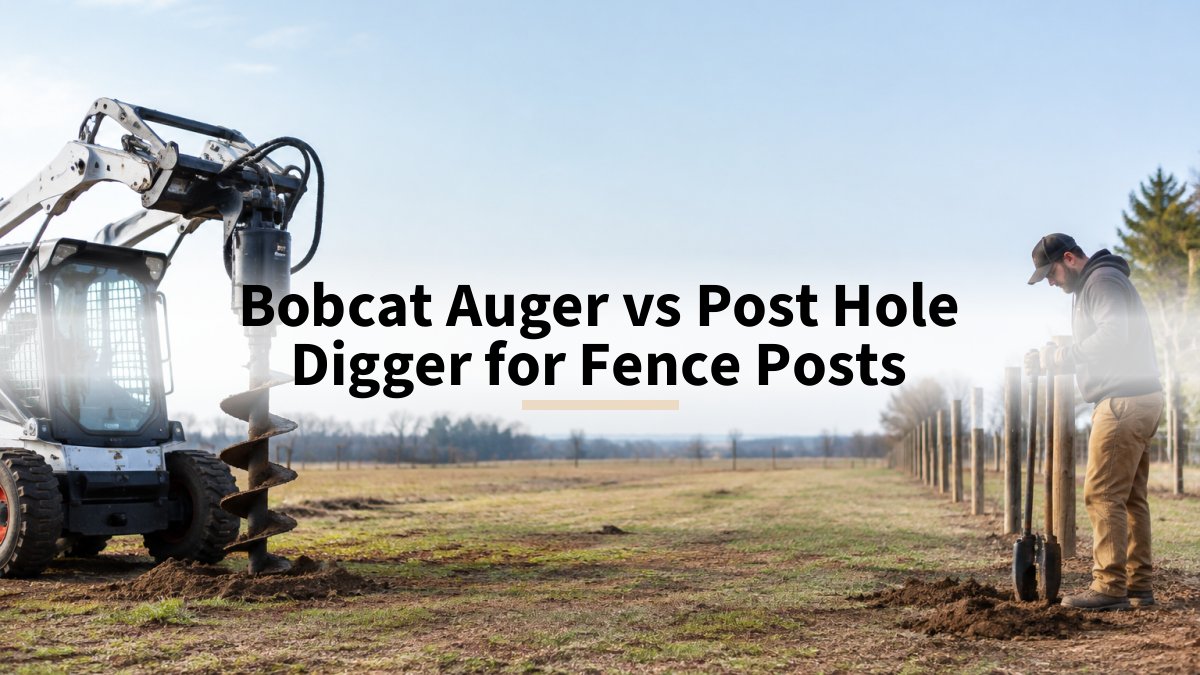
Bobcat Auger vs Post Hole Digger for Fence Posts
Quick Summary
A Bobcat auger is faster for long fence lines or 20 or more holes in workable soil, while a manual post hole digger suits short runs, tight spaces and rocky or root-filled ground. Count your holes and check the soil before you choose.
- A skid-steer auger digs many holes in the time a manual digger takes to finish one or two.
- A manual digger works around corners, trees and slopes where a machine cannot go.
- Rocky ground or roots can stall an auger, so a manual digger gives better control there.
- For 20 or more holes in workable soil, a Bobcat auger is typically the more efficient choice.
- Call 811 before digging so underground utilities can be marked.
Table of Contents
- Bobcat Auger vs Post Hole Digger: The Core Trade-Off
- Key Differences Between a Skid-Steer Auger and a Manual Digger
- Fence Post Hole Size and Fence Post Hole Depth Requirements
- Digging Post Holes in Rocky Soil, Clay, and Roots
- Digging Speed, Labor, and Project Size: Choosing by Hole Count
- Auger Rental for Fence Posts: Cost Comparison and Setup
- Your Next Step: Booking the Right Tool for Your Fence Line
- Frequently Asked Questions
Bobcat Auger vs Post Hole Digger: The Core Trade-Off
Last Updated: November 9, 2026
Choosing between a Bobcat auger and a post hole digger comes down to one question: how many holes do you need, and what is the ground like? Homeowners and property managers often weigh this decision every spring. A Bobcat auger drills fence post holes quickly with a skid steer, while a manual post hole digger works without any machine at all. Each tool has a clear best use.
A skid-steer auger is the faster option for a long fence line or many holes. A manual digger gives you more control on a small job or in tight spaces. Neither tool is right for every site, so the sections below walk through the differences, hole requirements, ground conditions and costs that should drive your choice.
Key Differences Between a Skid-Steer Auger and a Manual Digger
A skid-steer auger is a powered attachment that mounts on a Bobcat-style skid steer loader. The operator drives the machine to each hole location and the auger turns through the soil. A manual post hole digger is a two-handled tool that the operator pushes into the ground, twists, and lifts out soil by hand.
The main differences show up in speed, effort and equipment needs:
- Speed: A skid-steer auger can dig many holes in the time a manual digger takes to complete one or two.
- Labor: The machine does the digging, so the crew mainly guides the auger and clears spoil.
- Access: A skid steer needs room to drive along the fence line. A manual digger works in corners, between trees and on sloped ground where a machine cannot go.
- Equipment: A skid-steer auger requires a compatible skid steer and an auger attachment. A manual digger needs no power source.
Pros of a skid-steer auger:
- Much faster across long runs of posts
- Less physical strain on the operator
- Consistent hole depth when the operator controls the machine well
Cons of a skid-steer auger:
- Requires a compatible skid steer and attachment
- Cannot reach tight or obstructed spots easily
- Operators need training to avoid damage and to keep holes plumb
Pros of a manual digger:
- No machine, fuel or attachment needed
- Works in small yards and around obstacles
- Good control for short fences and corner posts
Cons of a manual digger:
- Slow and physically demanding for many holes
- Harder to reach consistent depth in dense or rocky ground
Watch out: a powered auger can bind or stall when it hits a root or stone. Stop, back off and clear the obstruction before pushing down again, or you risk damaging the auger or the machine.
Fence Post Hole Size and Fence Post Hole Depth Requirements
Hole size and depth depend on the post, the fence height and the local frost line. Fence post hole depth depends on the post, the fence height and local conditions, so check local guidance before you dig. Taller fences and gate posts usually call for deeper holes.
Hole diameter matters as much as depth. Your auger bit or manual digger should create a hole wide enough to leave room for backfill and concrete around the post. A skid-steer auger comes in several bit diameters, so choose the one that matches your post size before you start.
Check local building codes or your county's guidance on setting depth, since frost depth varies by region. Confirm the depth and diameter before you dig so you do not have to redo holes later.
Digging Post Holes in Rocky Soil, Clay, and Roots
Soil conditions decide which tool performs best. Soft, loamy soil suits either option. Heavy clay, rock and roots create more difficulty.
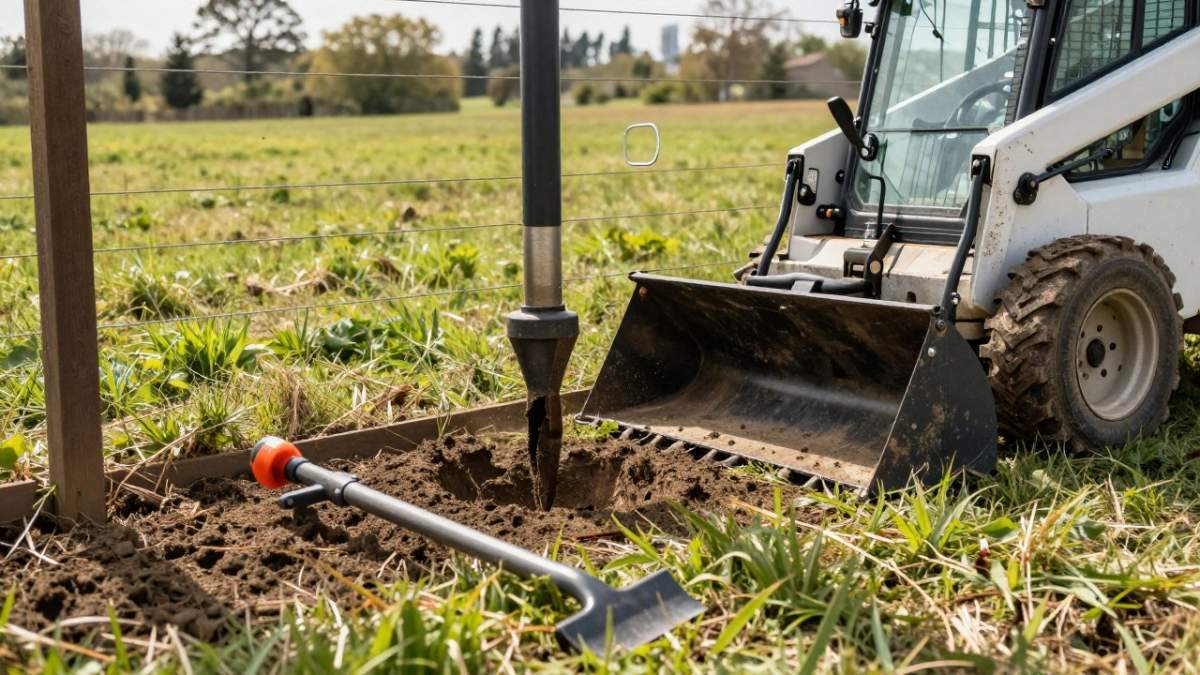
A skid-steer auger handles soft to moderately firm soil well. In rocky ground, the bit can hit stones and stall, which may damage the auger drive. Many operators use a heavier-duty auger or a specialized attachment for stony sites. Roots are a particular problem, because they can wrap around the bit and stop the machine.
A manual digger gives you feel for what is underneath. You can shift it around a rock or pull it out of a root-filled hole and try again. This makes it useful on rocky or root-heavy ground, although it takes much longer.
Before digging with any tool, check for buried utilities, water lines and septic components. Call 811 before you dig so underground utilities can be marked (811 Before You Dig).
Digging Speed, Labor, and Project Size: Choosing by Hole Count
Hole count is the first filter, but soil, post dimensions, and access decide the final tool. A decision matrix turns those variables into a clear recommendation instead of a guess.
Use this framework:
- 1 to 6 holes, soft to moderate soil, good access: A manual post hole digger is usually adequate. Setup and transport for a skid steer take longer than the job itself.
- 1 to 6 holes, rocky or root-filled soil: A manual digger gives you feel and control to work around obstructions. A Bobcat auger may bind and stall, and backing a stuck bit out of rocky ground can damage the drive.
- 7 to 20 holes, workable soil: Compare the manual crew's labor hours against the time to rent, transport, and operate a skid steer and auger. This is the range where the decision often flips based on access and soil.
- 20+ holes, workable soil: A Bobcat auger is typically the more efficient choice. The labor savings compound across a long run.
- Any hole count, tight access or steep slopes: A manual digger or a smaller walk-behind unit may be the only option if the loader cannot reach the line without rutting or damaging the site.
Post dimensions add a second filter. A 4-inch post in a 9-inch hole to 24 inches deep is well within the range of a manual digger for a short run.
Soil is the third filter. Soft, loamy ground suits either tool. Heavy clay slows a manual digger dramatically and can also stall an auger if the bit is too small for the loader's flow.
Labor savings add up quickly on larger projects. A crew of two or three working by hand may spend a full day on a short run that a machine completes in a fraction of the time.
Watch out: do not assume a larger machine is always faster.
The article's hole-count guidance points to a clear tool choice for each project size.
| Hole count | Conditions | Suggested tool |
|---|---|---|
| 1 to 6 holes | Soft to moderate soil, good access | Manual post hole digger |
| 1 to 6 holes | Rocky or root-filled soil | Manual digger for control |
| 7 to 20 holes | Workable soil | Compare labor hours with machine time |
| 20+ holes | Workable soil | Bobcat auger |
| Any count | Tight access or steep slopes | Manual digger or smaller walk-behind unit |
Auger Rental for Fence Posts: Cost Comparison and Setup
Renting an auger for fence posts is common for DIY projects, but the rental fee is only one line in the total cost.
Start with the attachment fit. A Bobcat auger is a skid-steer attachment that mounts on the loader's quick-attach plate.
Bit options matter as much as the drive. Skid-steer auger bits come in several diameters, so choose one that matches your post size.
Machine size affects performance. A smaller skid steer can fit through gates and along tight fence lines but may lack the hydraulic flow to turn a large bit in heavy clay.
A practical cost comparison for a typical fence project should include:
- Skid steer and auger rental: Rental rates vary by region and machine size, so request a current quote before you plan the job.
- Transport: Delivery and pickup fees, or trailer rental and fuel if you haul the machine yourself.
- Fuel: Loader fuel for the project hours, plus travel.
- Labor: Crew hours saved versus manual digging, valued at your own time or a hired helper's rate.
- Manual digger: One-time purchase price, no fuel, no transport, but many more labor hours.
For a handful of posts in soft soil, the manual digger usually wins on total cost.
Setup for a rented Bobcat auger should include:
- Confirm the bit diameter matches your post size and the drive is rated for your loader's hydraulic flow.
- Mark every hole location and call 811 to have utilities marked before you dig.
- Position the loader so the auger hangs plumb over the mark, and set the parking brake.
- Test the auger on one hole at low engine speed before starting the full run.
- Keep the auger vertical, use steady downward pressure, and lift to clear spoil every few inches.
Watch out: a bit that is too large for the loader's hydraulic flow can stall mid-hole and be difficult to back out, and an oversized hole weakens post stability and wastes concrete.
If you would rather have the work done by a professional, Busy Man Contracting LLC provides Bobcat services for residential and commercial properties, including trenching and site preparation. book a site assessment to discuss your fence line, soil, and project size before you rent equipment.
Your Next Step: Booking the Right Tool for Your Fence Line
Start by counting your holes, checking your soil and confirming your post size and depth. A short run in soft soil usually suits a manual digger. A long run in workable ground usually suits a skid-steer auger. Mixed conditions may call for both tools, with the machine handling the open runs and hand digging used around obstacles.
Before you decide, clear brush and check the fence line so the site is ready for digging. If you want help weighing the options, see the services we offer and talk through what your project needs. When you are ready to hire out the work, ask these questions first to compare contractors fairly.
Frequently Asked Questions
Is a Bobcat auger faster than a manual post hole digger for fence posts?
For more than a handful of holes, yes. A skid-steer auger drills a hole in a fraction of the time a manual digger needs, and it does not depend on the operator's arm strength. Speed drops sharply in rock, roots or compacted clay, where the auger may stall and need repositioning. For a single post or a short run in soft soil, a manual digger is often just as quick once you account for setting up the machine and transporting it. Compare the total time, including setup and cleanup, before deciding.
What size auger bit do I need for fence posts?
Choose a bit slightly wider than the post you plan to set, so there is room for gravel or concrete around it. Check that the bit matches your skid steer's auger drive and that the auger's torque rating suits the ground you expect. If you plan to set posts in concrete, measure the finished hole diameter against the concrete form you intend to use.
Can a Bobcat auger dig fence-post holes in rocky or clay soil?
A skid-steer auger can dig through many clay and soft rock conditions, but it works best in ground without large stones or heavy root mats. When the auger hits rock, it can stall, bind or chatter, which damages the bit and wastes time. If you hit a boulder, stop, back out the auger and clear the obstacle manually. Probing the line with a rod first helps you find buried rock before you commit a full auger run.
Is it worth renting a Bobcat auger for a fence project?
Renting makes sense when the project has enough holes to justify the machine time and transport, typically a long fence line or several gates and corners. Rental rates and delivery charges vary by location and equipment class, so get a current quote before you plan the job. For a few posts, hand digging or hiring a crew for the holes may cost less. Factor in the time you save, the physical effort avoided and the cost of a bit suited to your ground.