 Comparison
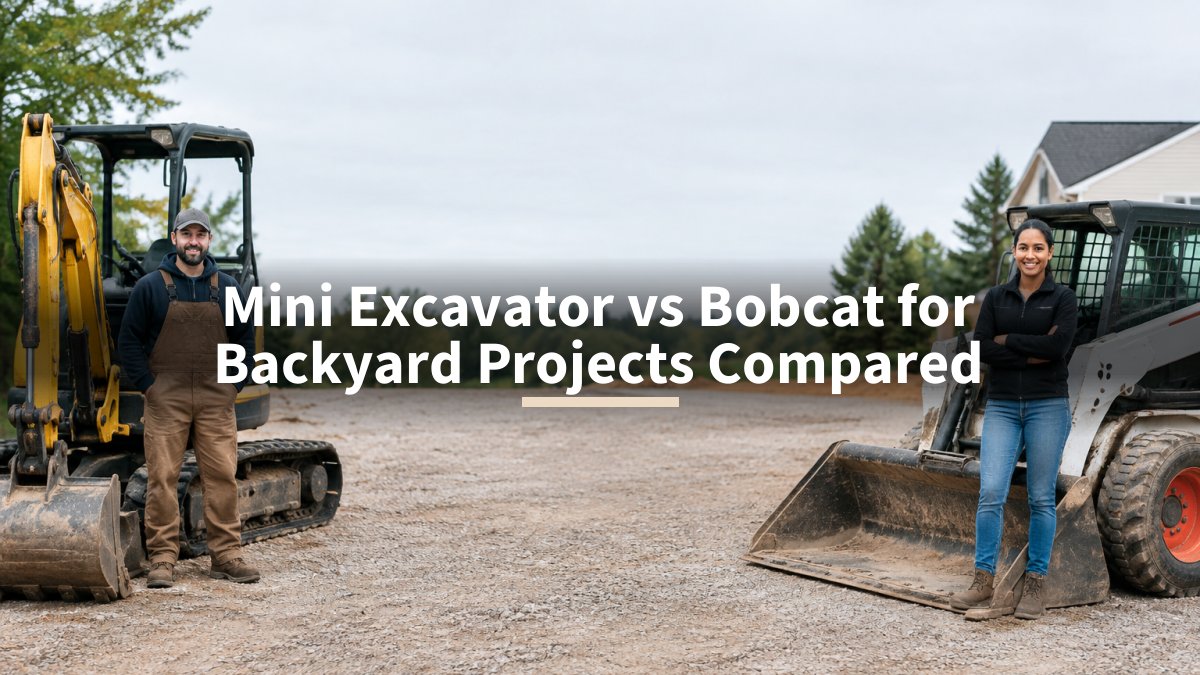
Mini Excavator vs Bobcat for Backyard Projects Compared
Quick Summary
The right choice depends on the job: a mini excavator is better for controlled digging and trenching, while a Bobcat skid steer is better for pushing, loading and spreading material. For mostly digging, pick the mini excavator vs Bobcat mini excavator; for moving and grading large areas, a skid steer usually fits.
- A mini excavator digs precisely at a fixed point, suiting trenches and footings near fences and trees.
- A Bobcat skid steer moves volume quickly, making it faster for spreading soil, gravel and mulch.
- Skid steers usually lead on large open grading, while excavators finish detail work near edges and walls.
- Measure gate width and turning space first, leaving several inches of clearance on each side.
- Call 811 to mark underground utilities before any digging, even for shallow work.
Table of Contents
- Mini Excavator vs Bobcat: Core Differences That Matter for Your Yard
- Mini Excavator vs Skid Steer for Grading and Leveling a Backyard
- Backyard Access, Turning Radius and Working in Tight Spaces
- Mini Excavator vs Bobcat for Backyard Projects: Cost, Rental and Total Project Expense
- Excavator or Skid Steer for Land Clearing and Stump Work
- Protecting Lawns, Paving and Underground Utilities During Backyard Work
- When to Hire Bobcat Services for Your Backyard Project
- Frequently Asked Questions
Mini Excavator vs Bobcat: Core Differences That Matter for Your Yard
Last Updated: November 16, 2026
Choosing between a mini excavator and a Bobcat skid steer for a backyard project comes down to one question: is the job mostly about digging or mostly about moving material? The wrong machine often costs time, damages turf, or leaves the project half finished. This guide explains where each machine excels, where it falls short, and how to decide before you rent or hire.
The two machines look similar but work differently. A mini excavator uses a boom, arm and bucket to dig at a fixed point, reaching down into the ground with precision. A skid steer, often called a Bobcat after the brand name, uses lift arms and a bucket to push, load, spread and grade material across a surface. Both are compact enough for many residential lots, but they solve different problems.
How a Mini Excavator Digs and Trenches
A mini excavator is built for controlled digging. Its arm and bucket let you cut a narrow trench for drainage, dig footings for a patio or fence, or reach a utility line without tearing up the whole lawn. Because the machine stays in one spot while the bucket works, it handles obstacles well. You can dig beside a fence or tree without driving over the area you want to protect.
The tradeoff is material handling. Moving large volumes of soil with an excavator means repeated swings and trips, which slows the job. A mini excavator is the better tool when the work is cut-and-place rather than bulk moving.
How a Bobcat Skid Steer Moves and Grades
A Bobcat skid steer shines when you need to push, load and spread. Its wide stance and lift arms move dirt, gravel and mulch quickly across a yard. It is also well suited to rough grading and leveling, since the operator can drive the machine across the surface and shape the ground as it goes.
Skid steers are less precise for deep, narrow digging. Their strength is volume and surface work, not reaching into a trench.
The two machines are built for different jobs, as the table below summarises.
| Machine | Best for | Key difference |
|---|---|---|
| Mini excavator | Controlled digging and trenching | Boom, arm and bucket reach down at a fixed point |
| Bobcat skid steer | Pushing, loading and spreading material | Lift arms move volume across a surface |
| Mini excavator | Digging beside fences and trees | Stays in one spot without driving over the area |
| Bobcat skid steer | Rough grading and leveling | Operator drives across the surface shaping ground |
| Mini excavator | Cut-and-place work | Slower for bulk soil moving |
| Bobcat skid steer | Bulk moving of soil, gravel and mulch | Less precise for deep, narrow digging |
Mini Excavator vs Skid Steer for Grading and Leveling a Backyard
Grading and leveling are where most homeowners first compare these machines. A skid steer is usually the faster choice for large, open areas. It pushes soil from high spots into low spots and spreads fill evenly. If your goal is to correct a sloped yard or improve drainage away from the house, a skid steer covers ground efficiently. Learn what a professional grading job involves before you hire anyone.
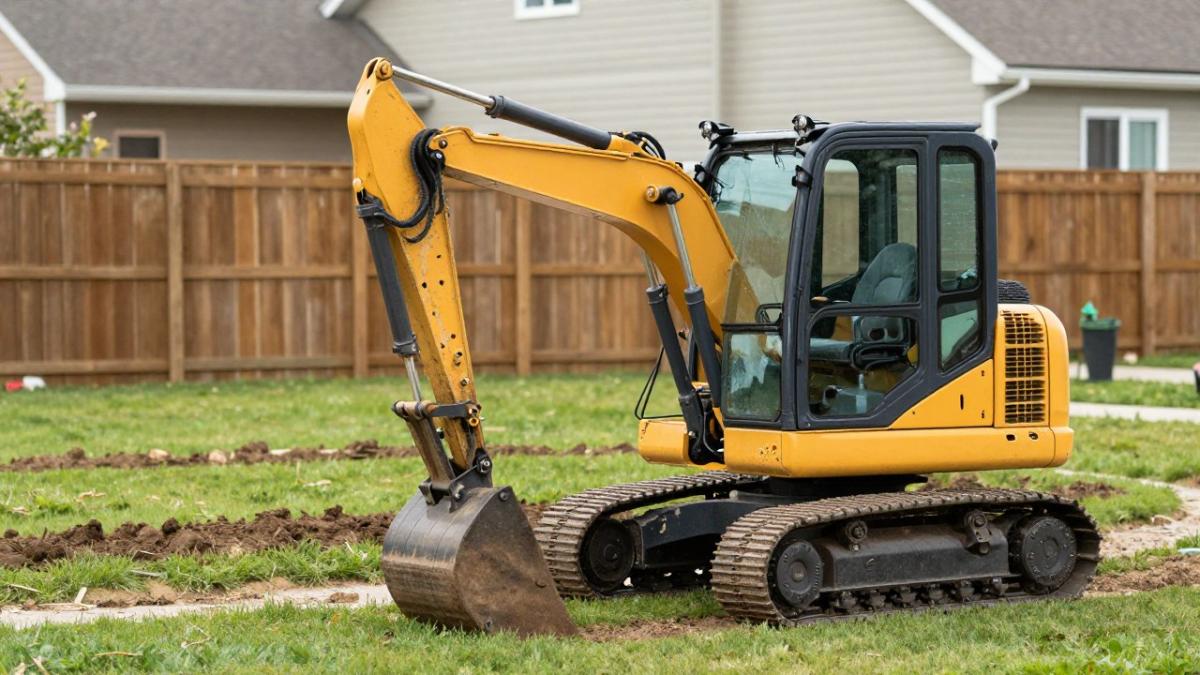
A mini excavator can still grade, but it works more slowly. Its strength is finishing work near edges, walls and garden beds where the skid steer cannot easily go. Many projects use both: the skid steer does the bulk leveling and the excavator handles the detail. Keep in mind that tracked machines disturb turf differently than wheeled ones, so check your lawn's tolerance before you start.
Backyard Access, Turning Radius and Working in Tight Spaces
Before you compare digging depth or lift capacity, measure the path the machine must travel. Most backyard projects fail at the gate, not at the job. A mini excavator is generally narrower than a skid steer, but published machine widths vary enough that you cannot assume either will fit. Get the exact width from the rental company or dealer spec sheet, then measure the narrowest point on your route: the side gate, the gap between the house and a fence, or the space beside a shed. Leave several inches of clearance on each side, because operators rarely track a machine perfectly straight.
Turning space matters as much as width. A skid steer can turn on its own axis, which helps in a cramped yard, but that pivot tears turf and can crack pavers or push fence posts. A mini excavator rotates its upper body without moving its tracks, so it can dig from one position longer, but the tail of the house can swing into a fence or wall. Check the tail-swing clearance on the spec sheet and walk the yard to confirm the counterweight will not hit anything when the machine rotates.
Plan the transport and staging area before the machine arrives. A trailer needs a straight approach and enough room to unload without backing over landscaping. Confirm the delivery vehicle can reach the drop point and that the machine has somewhere to sit when it is not working. If the only access is through a garage or along a narrow side yard, a smaller machine or a different approach may be the only practical option.
Watch out: a gate that measures wide enough on paper can still be too tight once the machine is loaded on a trailer or the operator needs to angle through it, so do a dry run with the actual dimensions before you book.
Mini Excavator vs Bobcat for Backyard Projects: Cost, Rental and Total Project Expense
Rental pricing for a mini excavator or a skid steer depends on machine size, rental duration, delivery distance, and attachments, and rates change by market and season. Get current quotes from a local rental company or dealer and ask what the rate includes. A daily rate is rarely the whole story: delivery and pickup, fuel, damage waiver, and attachment rentals often add to the bill, and a weekend rate can be cheaper than a single weekday if the machine is available.
Total project cost is bigger than the rental line item. Add transport, fuel, operator time, any repairs to lawn or hardscape, and disposal of excess soil. A machine that finishes in one day can cost less overall than a cheaper machine that takes three days and leaves more damage behind. If you need a trencher, auger, breaker, or grading bucket, price those attachments separately, because they can change which machine is the better value for your job.
For many homeowners, hiring a contractor with the right machine is the cost-effective route, because it removes the learning curve and the risk of an expensive mistake. Renting makes sense for a simple, contained job when you have the skill and time to run the machine safely. Compare the all-in rental cost, including your own time and any turf repair, against a contractor quote before you decide. Review realistic stump removal cost figures to benchmark your budget.
Watch out: a low hourly rate can hide a minimum charge, a delivery fee, or a damage waiver that makes the total higher than a competitor's quote, so ask for the full out-the-door price in writing.
Excavator or Skid Steer for Land Clearing and Stump Work
Land clearing and stump removal present a different choice. A mini excavator can dig around a root ball, cut through roots and lift the stump out cleanly, which suits removals where you need to control the hole. A skid steer with a grinding or cutting attachment works well for clearing brush, pushing debris into piles and grinding stumps down at ground level. See a practical walkthrough of removing a stump with a skid steer.
Stump work involves real risk. Underground roots can damage the machine, and removing a large stump without proper technique can injure the operator or nearby structures. If the stump is large or near a foundation, sewer line or fence, professional removal is usually the safer decision.
Protecting Lawns, Paving and Underground Utilities During Backyard Work
Before any digging, call 811 to have underground utilities marked. This free service applies to backyard trenching and excavation. Hitting a gas, electric or water line can be dangerous and expensive, so do not skip it, even for shallow work. If drainage is part of the job, this step-by-step dry well installation guide shows how to protect the yard afterward.
Protect hardscape and turf as well. Lay plywood or mats on the path the machine will travel, avoid turning on pavers, and keep the bucket close to the ground when moving loads. Ask whoever runs the machine how they plan to protect the areas you want to keep.
When to Hire Bobcat Services for Your Backyard Project
Many backyard jobs are easier to hire out than to rent. Busy Man Contracting LLC provides Bobcat machine services for residential and commercial properties, including stump grinding, lot grading, trenching and gravel driveway repair. Explore the full range of services to see whether they cover your project.
Renting makes sense for a simple, contained job when you have the skill and time to run the machine safely. Hiring makes more sense when the project involves utilities, a sloped lot, large volumes of material or a tight site where a mistake would be costly. A short decision matrix helps: if the job is mostly digging and you are comfortable operating, consider a mini excavator; if it is mostly moving and grading, a skid steer fits; if it is complex or risky, bring in a professional. For a deeper look at grading options, see our guide to choosing a grading contractor.
Last Updated: November 16, 2026
Need the right machine for your yard? Busy Man Contracting LLC can assess your site, protect your lawn and utilities, and get the job done. Contact us for a quote on your backyard project.
Frequently Asked Questions
Which is better for digging trenches in a backyard: a mini excavator or a skid steer?
A mini excavator is usually the better choice for trenches. Its boom, arm and bucket let the operator dig to a controlled depth and width, and it can work over obstacles such as fences or patios without repositioning. A skid steer can dig shallow trenches but is better suited to pushing and moving loose material. For drainage lines, utility runs or footings, a mini excavator gives more precise control, while a skid steer is more efficient for broad soil movement.
Is a mini excavator or skid steer better for grading a yard?
A skid steer is generally better for rough grading and leveling because its wide bucket and forward pushing power move large volumes of soil and gravel quickly. A mini excavator can also grade with careful bucket work and a blade attachment on some models, and it is useful for shaping slopes around existing features. For most backyard grading, a skid steer covers the area faster, while a mini excavator suits fine shaping near beds, walls or lawn edges.
Should I rent a mini excavator or a Bobcat skid steer for backyard work?
Rental depends on the task. Rent a mini excavator when the job centers on digging, trenching or precise placement. Rent a skid steer when you need to move soil, gravel or debris and level the surface. Pricing varies by machine size, rental length, delivery and attachments, so check current rates with local equipment rental shops or Busy Man Contracting LLC for a quote. Factor in transport, fuel and the time to learn the controls before deciding.
When should I hire an operator instead of renting equipment?
Hire an operator when the work involves buried utilities, sloped ground, tight access around the house or a project where a mistake is costly. Experienced operators reduce the risk of damaging lawns, paving, sprinkler lines or underground pipes and can often finish faster than a first-time renter. If your project is small, your yard is open and you are comfortable with heavy equipment, renting may be reasonable. Busy Man Contracting LLC provides operated Bobcat services for residential and commercial properties.