 blog
Cost to Dig Out a Tree Stump in 2026
Last Updated: November 1, 2026
Quick Summary
The cost to dig out a tree stump typically runs higher than grinding it, and the gap widens as stumps grow wider, deeper or harder to reach. Digging out a stump 6 to 12 inches across commonly costs $150 to $350, while stumps over 48 inches can exceed $2,000 to $4,000 or more.
- Stump diameter is the main price driver, measured at the widest point about a foot above ground.
- Grinding is usually cheaper because it leaves no hole to backfill and no root ball to lift.
- Tight gates, slopes, soft ground and nearby structures add time and raise the final price.
- Confirm whether the quote includes root removal, haul-away, backfill and grading.
- Call 811 to have underground utilities marked before any excavation begins.
Table of Contents
- What Digging Out a Tree Stump Actually Involves
- Stump Grinding vs Stump Removal: Which Costs Less
- Stump Removal Cost by Size
- Tree Root Removal Cost and Root System Considerations
- Filling the Hole After Stump Removal
- Booking Your Stump Removal Quote With Busy Man Contracting
- Frequently Asked Questions
Digging out a tree stump typically costs more than grinding it down, and the gap widens as the stump gets larger, deeper or harder to reach. Busy Man Contracting LLC works with homeowners and property managers across Sheridan and the surrounding area, so this guide explains what drives the cost to dig out a tree stump, how it compares with grinding, and what to ask for when you request a quote.
Pricing depends on the stump's diameter, root system, equipment access, and what happens to the hole afterward. For current pricing or a quote, visit the Busy Man Contracting LLC website.
What Digging Out a Tree Stump Actually Involves
Digging out a stump means removing the entire stump and as much of the root system as practical, leaving an open hole that then needs to be filled and graded. This is different from grinding, which chips the stump down to a few inches below ground and leaves most of the roots in place.
A common misunderstanding is that "dig out" means every root is pulled. In practice, large lateral roots are cut back and lifted while small fibrous roots stay in the soil. The result is a cleared, usable spot, but the ground underneath is disturbed, so expect a hole and some settling.
Dense hardwood stumps, stumps that have been sitting for years, and stumps near foundations, pipes or fences all take more time and care.
Stump Grinding vs Stump Removal: Which Costs Less
Grinding is usually the lower-cost option, but the size of the gap depends entirely on the stump. The table below shows how the two methods compare for the same stump on the same site, using typical national price bands rather than a single blended average. Treat these as planning ranges, not quotes.
| Stump diameter | Grinding (typical range) | Digging out (typical range) | What drives the difference |
|---|---|---|---|
| 12 in. or less | $75-$150 | $150-$350 | Grinding is a few minutes of machine time; digging out still needs hand work, root cutting, and backfill |
| 13-24 in. | $150-$300 | $300-$600 | Root spread starts to matter; digging out may require a mini-excavator |
| 25-36 in. | $300-$500 | $600-$1,200 | Larger root balls, more haul-away, longer backfill and settling |
| 37-48 in. | $500-$800 | $1,200-$2,000+ | Heavy equipment access, possible crane or winch, significant soil replacement |
| Over 48 in. | $800-$1,500+ | $2,000-$4,000+ | Often priced by the hour once the stump exceeds a grinder's practical reach |
Your quote will depend on access, species, roots, and disposal.
Why grinding is usually cheaper. A stump grinder parks over the stump and chips it into mulch. There is no hole to backfill, no root ball to lift, and debris can often be left on site.
When digging out is worth the premium. Digging out costs more because it removes the stump and major roots, leaving a hole that must be backfilled and graded. That extra work buys you:
- A site that can accept a foundation, patio, driveway, or new tree without hitting buried wood later.
- Removal of surface roots that would otherwise heave pavement or lawn.
- A clean planting bed rather than a mulch pile over buried debris.
The trap in comparing quotes. Some providers advertise "stump removal" but perform grinding. Ask each contractor to state in writing whether the price includes (1) grinding only, (2) grinding plus surface root removal, or (3) full excavation and backfill. Two quotes that look $200 apart may be for completely different scopes.
If the spot will become a garden bed or lawn, grinding is almost always the better value. If it will hold a structure, a pool, or a replacement tree, digging out is the safer choice.
Stump Removal Cost by Size
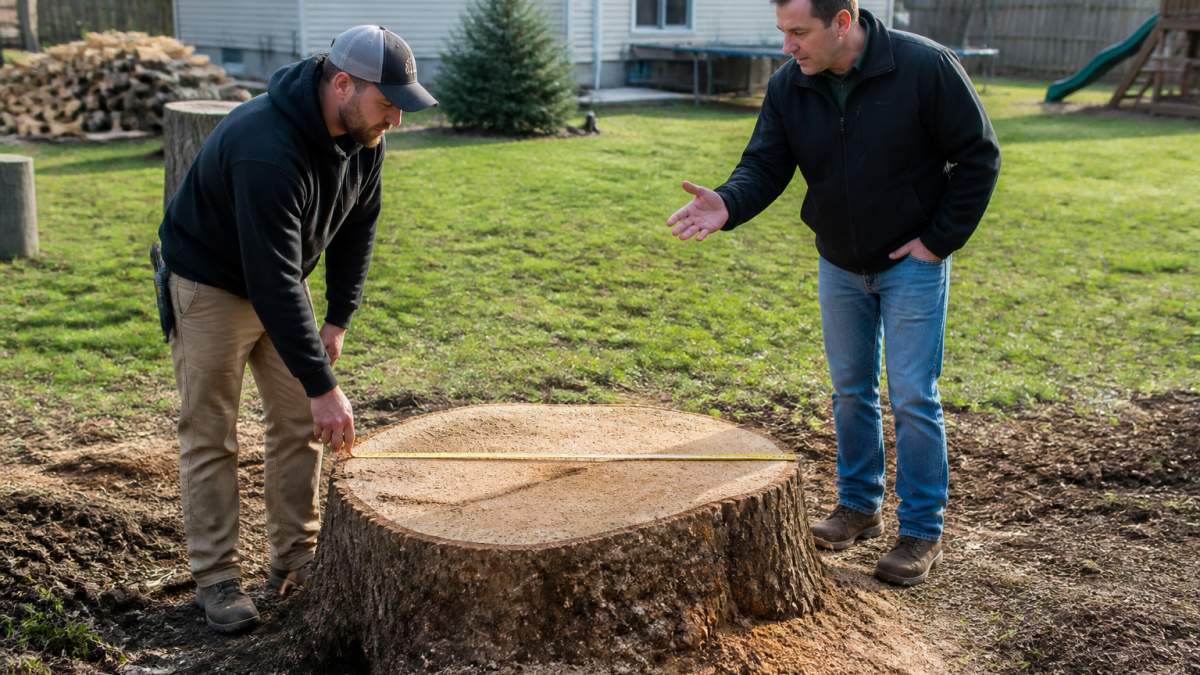
Stump size is the main driver of price, and most contractors quote by diameter measured at the widest point about a foot above ground. For general notes on working ground and site conditions that affect the job, see practical notes on working ground. The ranges below reflect common national pricing for digging out (full removal, not grinding) and assume reasonable equipment access. They are planning figures, not quotes.
| Stump diameter | Typical dig-out cost | Typical time on site |
|---|---|---|
| 6-12 in. | $150-$350 | 1-2 hours |
| 13-24 in. | $300-$600 | 2-4 hours |
| 25-36 in. | $600-$1,200 | Half day to full day |
| 37-48 in. | $1,200-$2,000 | 1-2 days |
| Over 48 in. | $2,000-$4,000+ | Often hourly, 2+ days |
Always ask whether a minimum call-out charge includes haul-away and backfill or covers labor only.
A useful quote is itemized. If a contractor hands you a single number with no breakdown, ask for the line items.
Factors That Push the Price Up or Down
Several conditions change the final cost:
- Stump diameter and height: Wider and taller stumps need more equipment time; height above grade gives a machine more leverage.
- Wood hardness and species: Dense hardwoods like oak and hickory are harder to cut and lift than softwoods like pine or poplar. Species also affects root spread.
- Root spread: Extensive roots add labor, especially under paving, foundations, or irrigated lawn.
- Access: Tight gates (under about 36 inches), slopes, soft ground after rain, and limited room to swing equipment all add time. A stump in a fenced backyard may cost 30-50% more than the same stump beside a driveway.
- Proximity to structures and utilities: Stumps near buildings, utility lines, septic systems, or irrigation require careful work and sometimes hand digging. A utility locate (call 811) is a standard first step.
- Age and decay: A long-dead stump may break apart more easily, lowering labor, but rotted wood mixed with soil can also slow excavation.
- Cleanup and haul-away: Removing debris and disposing of wood and soil may be billed separately. Ask whether the price includes hauling or leaves debris on site.
Measure the stump's diameter at the widest point, about a foot above the ground, so you have a reference when you call.
Tree Root Removal Cost and Root System Considerations
Root removal is where many digging-out estimates change. Shallow, spreading roots from a large tree can extend well beyond the stump, and each root that needs cutting and lifting adds time.
Ask the provider how much of the root system they plan to remove and whether that is included. A quote that covers only the stump may leave roots behind that later push up through your lawn or interfere with new planting.
Root removal also affects site safety. Cutting large roots under pressure can destabilize nearby trees or structures, so a provider should assess the surrounding area before committing to a number.
Filling the Hole After Stump Removal
Digging out leaves a hole that must be backfilled. Clean fill soil, compacted in layers and graded so water drains away, prevents settling and pooling. Many people underestimate this step, but it often determines whether the area looks finished a few months later.
Ask whether backfill, topsoil and grading are included. Some quotes cover excavation only, leaving you to source and place fill yourself. Confirm how much settling to expect and whether the provider will top off the area if the ground sinks.
Booking Your Stump Removal Quote With Busy Man Contracting
Busy Man Contracting LLC provides stump grinding, lot grading, trenching and gravel driveway repair using Bobcat equipment, with a focus on leaving the ground better than we found it. You can explore the full range of services before requesting a quote.
To get a useful estimate, have these details ready:
- Stump diameter and approximate height
- Tree species, if you know it
- Access route for equipment
- Whether the stump is near a structure, driveway, fence or utility
- What you plan to do with the ground afterward
Request a quote for an on-site assessment of your stump.
Frequently Asked Questions
How much does it cost to dig out a tree stump?
Costs to dig out a tree stump depend on stump diameter, depth, root spread, soil conditions and how easily equipment can reach the site. Because prices vary by provider and by the factors above, the most reliable figure comes from an on-site inspection. For a quote based on your property, visit the Busy Man Contracting LLC website.
Is it cheaper to dig out a stump or grind it?
Grinding is usually the lower-cost option because it removes the stump to a depth below grade without excavating the full root ball. Digging out costs more because it removes the stump and much of the surrounding root system, which takes more labor and equipment time. Digging out makes sense when you plan to build over the spot or want the roots gone entirely.
Can you dig out a tree stump yourself?
Small stumps with shallow roots in loose soil can sometimes be removed by hand with an axe, mattock and shovel, though it is slow and physically demanding. Large stumps, stumps with deep taproots, or stumps near utility lines, septic systems or water lines should be handled by a professional. Before digging, call your local utility locate service to mark buried lines on your property.
What happens to the hole after a stump is removed?
After removal, the hole left behind is typically backfilled with clean soil, compacted in layers, and graded so water drains away from the area. Settling is common, so the spot may need a second top-up of soil and seed or sod.