 How-to
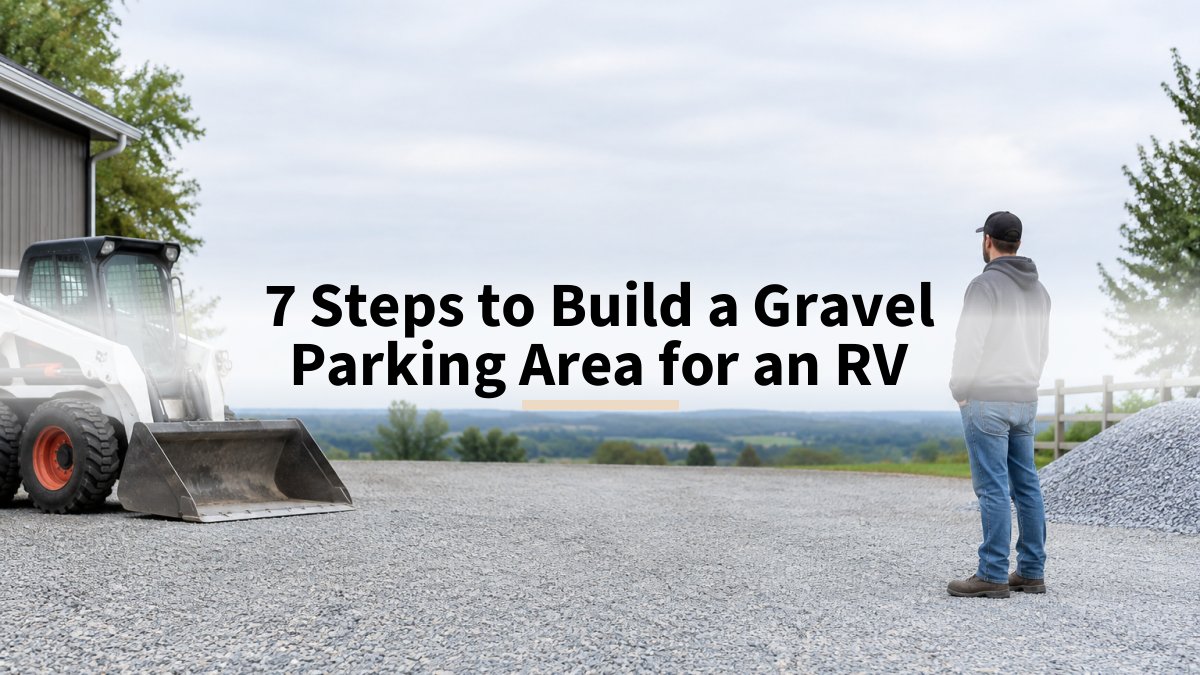
7 Steps to Build a Gravel Parking Area for an RV
Last Updated: November 13, 2026
Quick Summary
To build a gravel parking area for an RV, mark the pad, excavate to firm ground, grade it with about a 2 percent slope for drainage, lay landscape fabric, add a compacted base layer, then spread and compact the top gravel. Measure your RV and add at least 3 feet on every side.
- Add at least 3 feet of extra space on every side of your RV.
- Grade the pad with about a 2 percent slope for drainage.
- Lay landscape fabric with overlapping seams to block weeds.
- Add the base layer in compacted lifts before spreading top gravel.
- Skipping compaction can cause rutting under heavy tires.
Table of Contents
- What You'll Need: Materials, Tools, and Pad Size
- Steps to Build a Gravel Parking Area for an RV
- Gravel RV Pad Cost and Whether to Hire a Contractor
- Frequently Asked Questions
Building a gravel parking area for an RV is one of the most cost-effective ways to give your camper a level, stable spot at home. This guide covers materials, steps, and costs so you can decide whether to DIY or hire help.
What You'll Need: Materials, Tools, and Pad Size
Measure your RV's length and width, then add at least 3 feet on every side for leveling and maneuvering.
- Crushed stone or gravel for the top layer
- Coarse base material such as crush and run
- Landscape fabric to block weeds and soil
- Edge restraint such as timber or steel
- Shovel, rake, and tamper or plate compactor
Pricing depends on pad size, gravel type, and delivery distance, so check local rates with your supplier or contractor.
The table below summarises the key materials and sizing guidance for an RV gravel pad.
| Item | Value | Note |
|---|---|---|
| Extra space per side | At least 3 feet | For leveling and maneuvering |
| Top layer | Crushed stone or gravel | Final driving surface |
| Base layer | Coarse crush and run | Sits beneath the top gravel |
| Weed barrier | Landscape fabric | Blocks weeds and soil |
| Edge restraint | Timber or steel | Holds the pad edges |
| Key tools | Shovel, rake, tamper or plate compactor | Needed for prep and compaction |
Steps to Build a Gravel Parking Area for an RV
- Mark the pad with stakes and string.
- Excavate sod and topsoil down to firm ground.
- Grade for drainage with about a 2 percent slope.
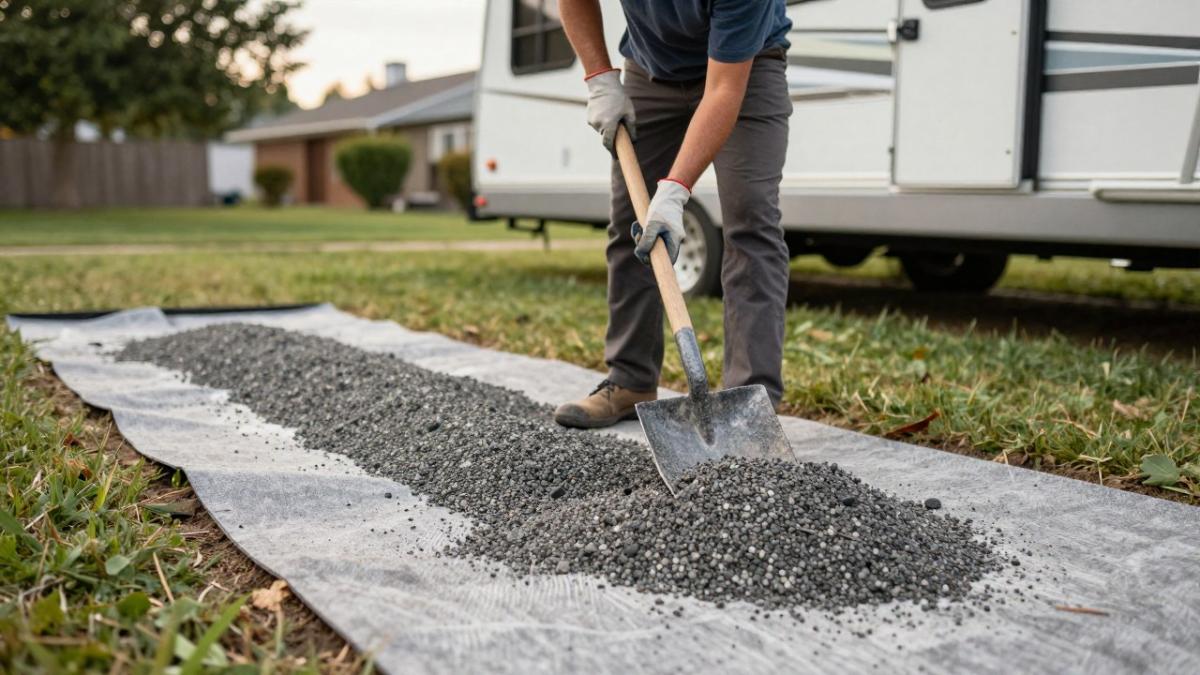
- Lay landscape fabric, overlapping seams.
- Add the base layer in compacted lifts.
- Spread the top gravel and rake it smooth.
- Compact and check level before parking.
A common mistake is skipping compaction. Loose gravel shifts under heavy tires and can lead to rutting. Learn why gravel surfaces fail in freezing weather and how to build them to last. See how a professional fixes common gravel problems like drainage and base failure.
Gravel RV Pad Cost and Whether to Hire a Contractor
Doing the work yourself saves labor but demands time, equipment, and physical effort. Hiring a contractor makes sense for large pads, poor drainage, or soft soil that needs extra base depth. A contractor can handle grading, gravel and trenching for the whole pad. Ask any contractor for a written quote that lists materials, grading, and cleanup so you can compare options fairly. Our guide covers what to check before choosing a grading contractor.
Last Updated: November 13, 2026
Frequently Asked Questions
What is the best gravel for an RV pad?
Crushed angular stone, often sold as crush and run or a 3/4-inch crushed gravel, is the most common choice for an RV pad. Its sharp edges lock together when compacted, which resists rutting under heavy wheels. Washed stone and round pea gravel shift under load and are better suited to decorative areas. Pricing depends on quantity, delivery distance, and stone type, so ask your local supplier for current figures.
How deep should a gravel RV parking pad be?
Most gravel RV pads use a base of roughly 4 to 6 inches of compacted crushed stone, topped with a finish layer of about 2 inches. Softer or wetter soil, or a heavier rig, calls for a deeper base. Build the base in lifts no thicker than 3 inches, compacting each one with a plate compactor before adding the next, so the pad does not sink or rut over time.
Do I need to compact gravel for an RV parking pad?
Yes. Compaction locks the stone together and prevents settling, rutting, and washouts under the weight of an RV. Compact the base and each gravel lift with a plate compactor, then check that the surface is level and firm before parking. Skipping compaction is one of the most common reasons a gravel pad fails within the first season.