 How-to
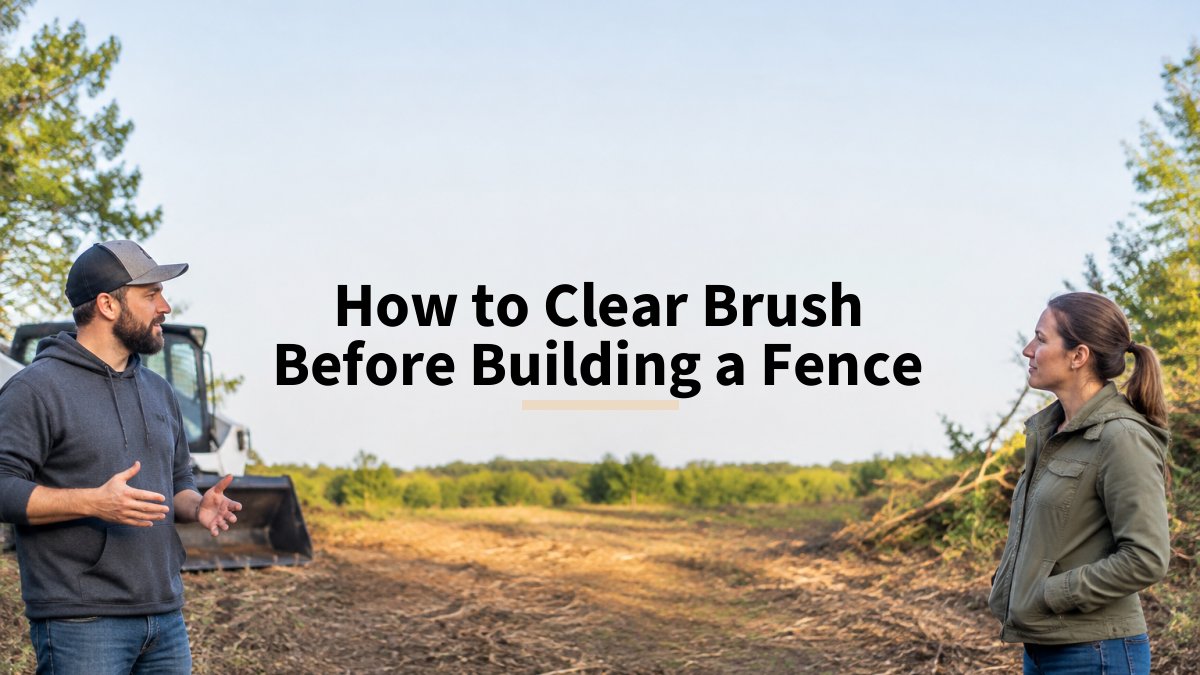
How to Clear Brush Before Building a Fence
Quick Summary
To clear brush before building a fence, first mark the fence line with stakes and a string line, then cut low growth with a string trimmer or brush cutter and drop small trees flush to the ground. Keep the corridor about 3 to 4 feet wide, and call 811 before digging.
- Confirm your property line and call 811 before any cutting or digging.
- Mark the fence line with stakes and a string line before you cut anything.
- Keep the cleared corridor about 3 to 4 feet wide for most residential fences.
- Cut trunks under about 4 inches in diameter flush to the ground, not at knee height.
- Remove roots and stumps inside post holes, because roots can twist posts as wood dries.
Table of Contents
- Why Clearing the Fence Line Matters Before You Build
- Check Utilities, Property Lines and Permits First
- Clear Brush Step by Step: Tools and Methods
- Clearing Cost per Acre and Disposal of Debris
- Frequently Asked Questions
Why Clearing the Fence Line Matters Before You Build
Clearing brush before you build a fence is the step most homeowners rush, and it causes the most trouble later. Posts sink crooked when they hit roots, wire sags when branches press against it, and crews lose time in a dense line. Clean the line first and the rest goes faster.
A clear corridor also makes the fence last longer. Dense growth holds moisture against wood posts and keeps the ground damp, speeding rot. Clearing lets sunlight and air reach the posts and the ground around them.
- Straighter post alignment and easier string lines
- Fewer surprises from roots and buried debris
- Better access for the crew and their equipment
- Less moisture trapped against wood posts
Watch out: Do not start cutting until you know where the fence will run. Clearing a wider strip than you need wastes time and can remove shade and cover you wanted to keep.
Check Utilities, Property Lines and Permits First
Before any cutting or digging, confirm where your property line runs and what sits underground. A surveyed boundary keeps the fence on your land and prevents disputes with neighbors; if unsure, hire a licensed surveyor.
Call 811 before you dig (811 Before You Dig). In the United States, 811 connects you to your local utility locating service, which marks buried gas, electric, water and communication lines for free. Fence posts often go down 2 to 3 feet, so this matters even for a short run.
Check your local government office for fence permits and height limits. Many cities and counties regulate fence height, setbacks from the street and materials. Some homeowner associations add their own rules.
Clear Brush Step by Step: Tools and Methods
Work in a deliberate sequence so you cut each stem once and never re-clear the same ground.
- Mark the corridor before you cut. See the land clearing and grading services offered for this kind of work. Set stakes at each end of the run and pull a string line tight between them. For most residential fence types, a cleared corridor 3 to 4 feet wide is enough to walk, set posts, and stretch wire or hang panels; add width on slopes or where equipment must pass. Flag any trees or shrubs you intend to keep.
- Walk the line and flag hazards. Before you hire anyone, review what to ask a land clearing contractor. Look for wasp nests, poison ivy, buried debris, low overhead lines, and leaning dead trees. This five-minute pass prevents most injuries.
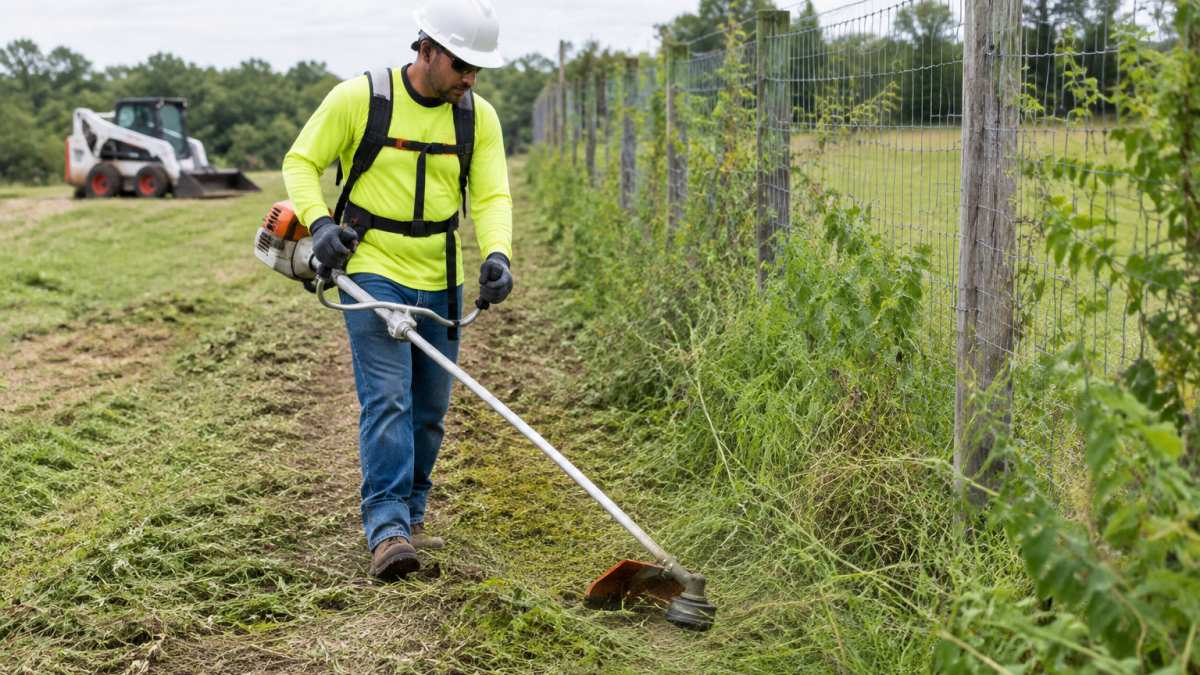
- Cut low growth first. Use a string trimmer for grass and weeds, and a brush cutter with a metal blade for saplings and thick stems. Work from the cleared end toward the uncleared end.
- Drop small trees. Cut trunks under about 4 inches in diameter with a bow saw or chainsaw, flush to the ground, not at knee height, so stumps do not become tripping hazards or post-hole obstacles. Leave desirable shade trees outside the corridor alone.
- Handle stumps and roots in the post line. Grind stumps low or dig out roots inside a planned post hole; a post set against a root will twist or lean as the wood dries. Check the cost to dig out a tree stump before you budget for it.
- Haul or chip debris as you go. Compare heavy equipment rental options if you plan to handle the work yourself. Move cuttings out of the corridor before setting posts; piles left in the line get trampled, hold moisture, and hide hazards.
Match the tool to the vegetation and terrain. A string trimmer handles grass and weeds, a brush cutter with a metal blade handles stems up to roughly 1 to 2 inches, and a chainsaw is right for trunks but requires training, chaps, and a clear escape path. On slopes, steep or rocky ground, or dense stands, a skid steer or mini excavator clears fast but compacts soil and can damage roots of nearby desirable trees, so keep heavy machines off wet ground and away from tree root zones.
Watch out: Wear eye and ear protection, sturdy boots, and gloves, keep bystanders outside the cut zone, and never run a chainsaw alone or above shoulder height.
The table below summarises the six clearing steps and the timing or detail each one calls for.
| Step | What to do | Key detail |
|---|---|---|
| 1. Mark the corridor | Set stakes and pull a string line | 3 to 4 feet wide for most fences |
| 2. Walk the line | Flag wasp nests, poison ivy, debris, lines | About five minutes |
| 3. Cut low growth | Use a string trimmer or brush cutter | Work from cleared end toward uncleared |
| 4. Drop small trees | Cut trunks flush to ground | Trunks under about 4 inches diameter |
| 5. Handle stumps and roots | Grind stumps or dig roots in post holes | Roots can twist posts as wood dries |
| 6. Haul debris | Move cuttings out of the corridor | Before setting posts |
Clearing Cost per Acre and Disposal of Debris
Cost depends on terrain, brush density, access, and local labor rates, so pricing varies from job to job. Pricing for any project depends on scope and site conditions, so request a quote for your specific property. Compare stump grinding and stump removal to see which fits your yard before you request quotes. Ask whether a quote includes stump grinding and debris hauling, which are often billed separately.
Plan disposal before the first cut, because hauling is often an overlooked cost. Common pathways include:
- Burning. Many jurisdictions allow burning only in certain seasons, with a permit, and on approved days; check your state or local fire authority and city or county rules first. Never burn near a fence line, overhead wires, or dry grass.
- Hauling. Transfer stations and yard waste sites charge by weight or load, and some limit brush diameter or exclude stumps; call ahead for hours, fees, and accepted material.
- Composting or on-site stacking. Brush stacked well away from the fence line can break down over time, but piles attract pests and hold moisture, so keep them off the post line.
Decide the disposal method before you cut, size the debris piles to match it, and keep the corridor clear as you go. That single planning step prevents the most common delay on a fence project: a finished line buried under a pile of brush nobody budgeted to move.
Frequently Asked Questions
How wide should you clear a path before installing a fence?
Clear a corridor wide enough for the crew and equipment to work comfortably, typically several feet on each side of the planned fence line, so posts can be set straight and the fence can be built without obstruction. Mark the route with stakes or flagging before cutting, and widen the corridor where you expect to dig post holes or run a skid steer. Keep the cleared width consistent along the full length so the fence is easy to inspect and maintain after installation.
Can you clear a fence line without heavy equipment?
Yes. Small brush, saplings and undergrowth can be cleared with a string trimmer, pruning saw, loppers, a hand axe and a bow saw. Work from one end of the line to the other, cutting low and removing material as you go. Hand clearing takes longer on dense or thorny growth, so for larger trees or heavy root systems a skid steer or tractor-mounted mower may be more practical. Always wear eye protection, gloves and sturdy boots.
What is the best time of year to clear brush?
Late fall through winter is often a good window in much of the United States because vegetation is dormant, the ground is usually firm enough to work, and nesting seasons for many birds have ended. Check your state and local rules before cutting, since some areas restrict clearing during certain months. Plan around wet weather, which can make soil soft and leave ruts that complicate fence installation later.