 How-to
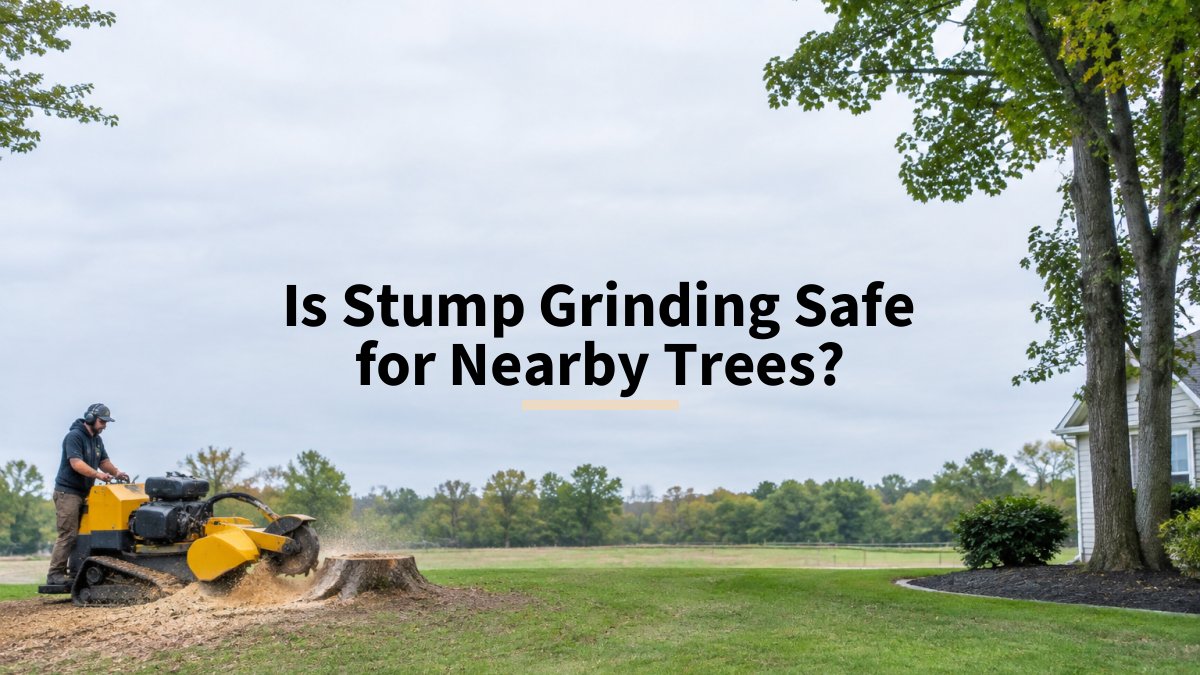
Is Stump Grinding Safe for Nearby Trees?
Quick Summary
Stump grinding is safe for nearby trees when the job is planned around the root zone. Grinding removes the stump and a few inches below grade, but roots spreading outward can still be disturbed, so the risk depends on how close the grinder works to them.
- Roots often spread two to three times wider than the canopy, so distant-looking trees may still have roots under the stump.
- Grinding leaves lower roots in the ground, making it usually lower-risk than full stump removal.
- Shallow-rooted species such as maples and birches are more exposed to root disturbance.
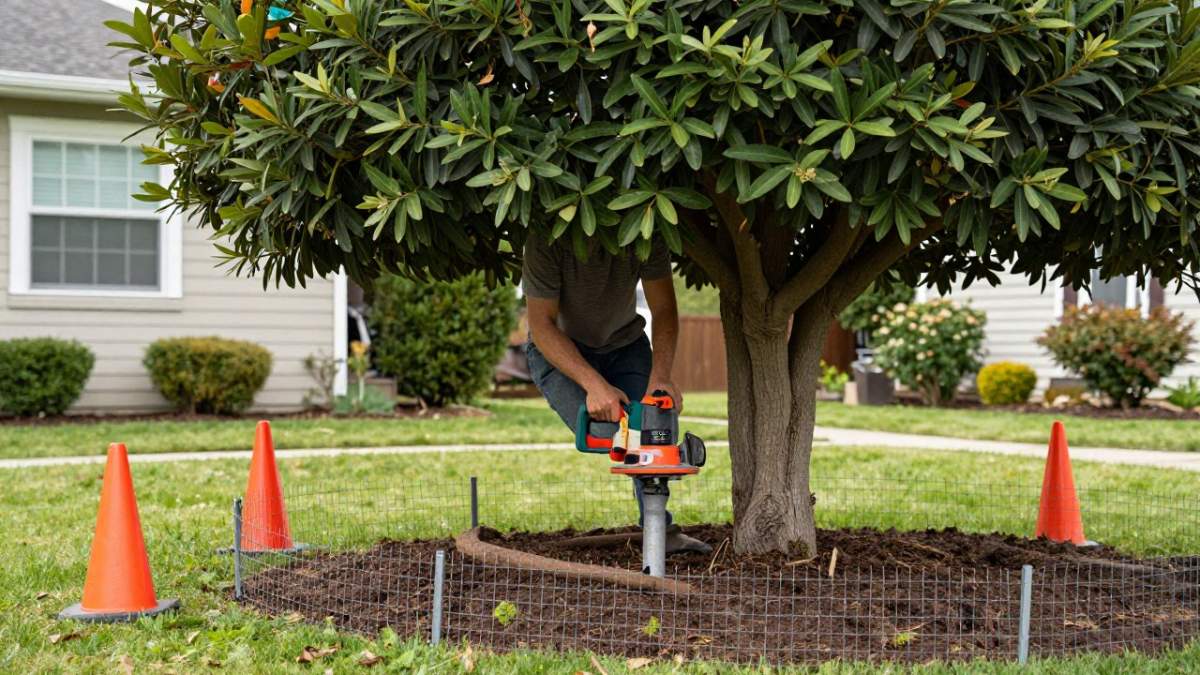
- Mark the root zone with stakes or cones and call 811 before any digging.
- Watch for early yellowing, thinning canopy, bark cracks or fungal growth after grinding.
Table of Contents
What Stump Grinding Involves and Why Nearby Roots Are at Risk
Is stump grinding safe for nearby trees? The short answer is yes, when the job is planned around the root zone. Grinding removes the stump above ground and a few inches below it, but the roots that spread outward can still be disturbed.
Stump grinding uses a rotating cutting wheel to chip the wood down to or slightly below grade. The machine works in passes, moving side to side across the stump until the wood is reduced to chips. Most of the disturbance happens in the top layer of soil, but the wheel and the operator's movements can reach roots that run close to the surface.
Grinding Versus Complete Stump Removal
Grinding and full removal are different jobs with different risks.
- Grinding leaves the lower roots in the ground and only removes the wood above grade.
- Full removal digs out the stump and most major roots, which causes far more soil disturbance.
- Grinding is usually the lower-risk option for a yard with healthy trees nearby.
- Full removal may be needed when roots are rotting or the stump sits in a planting bed you plan to replant.
For most yards with mature neighbors, grinding is often the lower-risk choice. It keeps the root system mostly intact while clearing the space you need.
Stump Grinding Damage to Roots: How Much Risk Is Real
Roots are the main concern. A nearby tree's roots often spread two to three times wider than its canopy, so a tree that looks far away may still have roots under the stump. Damage risk depends on how close the grinder works to those roots and how much soil gets churned.
Root-System Overlap and Species-Specific Risk
Not all trees handle root disturbance the same way. Shallow-rooted species such as maples and birches tend to have roots near the surface, so they are more exposed. Deeper-rooted trees face less risk from a shallow grind, but any tree can suffer if roots are cut close to the trunk.
Before grinding, look at where the roots of nearby trees likely run. Note the species, its size and any signs of stress. See what stump grinding typically costs so you can budget for protection and planning.
Warning Signs of Damage to Nearby Trees
Watch for these signs after grinding, because damage can show up weeks or months later:
- Leaves that yellow, wilt or drop early
- Thinning canopy or dieback in branches
- Cracks or fresh wounds on the bark near the grinding area
- Soil that heaves, sinks or stays waterlogged
- Fungal growth or mushrooms at the base of the trunk
If you see these signs, call an arborist promptly. Early action often saves a tree that would otherwise decline.
How to Protect Trees During Stump Grinding
Good planning prevents most damage. Use the steps below to protect the trees you want to keep.
Assessing Distance Between the Stump and Neighboring Trees
Measure from the stump to the nearest tree trunk. As a rule of thumb, keep the grinder at least several feet from any trunk, and be more careful when the stump sits inside the tree's likely root zone. A stump that is only a few feet from a large tree needs extra caution, or a different approach.
Step-by-Step Precautions Before and During Grinding
- Mark the root zone. Flag the area around nearby trees with stakes or cones.
- Check for buried utilities. Call 811 before any digging (811 Before You Dig).
- Water the soil lightly. Damp soil cuts cleaner and reduces compaction.
- Grind in shallow passes. Remove the stump a few inches at a time rather than all at once.
- Avoid driving over roots. Keep the machine and trucks off exposed root zones.
- Stop if roots tear. Torn roots are harder for a tree to recover from than clean cuts.
What Happens to Roots After Stump Grinding
Roots left in the ground will slowly decay over months or years. Nearby tree roots usually stay in place and keep working. The main concern is the cut ends of any roots the grinder touched. Those cuts give disease and pests a way in, so keep an eye on the tree during the next growing season.
Stump Grinding Near Tree Roots: Grindings, Mulch and When to Call an Arborist
The wood chips left behind can be used or disposed of. Fresh grindings are rich in nitrogen as they break down, which can temporarily pull nitrogen from the soil. Many homeowners spread grindings as mulch in a layer about two to three inches deep, but keep the mulch pulled back from tree trunks to avoid rot and pest problems.
Call an arborist when a tree is large, already stressed, or sits very close to the stump. A certified arborist can assess root health and recommend extra protection.
Booking Stump Grinding Near Your Trees With Busy Man Contracting
If you have stumps near valuable trees, we can plan the job around their root zones. Request a quote from our team to talk through your yard and get a clear plan. Before you book any contractor, review the questions to ask before hiring a land clearing contractor.
Frequently Asked Questions
Will stump grinding damage the roots of nearby trees?
It can, but the risk depends on how close the grinder works to neighboring roots and how deep the cutting goes. Most stump grinders cut into the stump and the top few inches of surrounding soil, so roots of trees several feet away are usually unaffected. Roots that run directly under or within roughly the stump's width are the most exposed. Before grinding, look for roots radiating from the stump and from neighboring trees, and stop or change approach if the grinder would reach them. An arborist can assess overlap when the root systems are unclear.
How close can a stump grinder get to another tree?
There is no single safe distance, because root spread varies with species, age, and soil conditions. A practical starting point is to keep the grinder's cutting path well outside the drip line of neighboring trees and to avoid working within the area where their roots are likely to grow. Mature trees often have roots extending well beyond their canopy. If a neighboring tree is close to the stump, reduce the grinding depth or consider a partial removal instead of a full grind.
What happens to roots after stump grinding?
Roots left in the ground after grinding generally decay over time, since the grinder removes only the stump and the upper soil layer. Severed roots near the stump can cause minor stress to nearby trees, and exposed root ends may attract pests or fungi. Filling the grind area with topsoil and reseeding helps the site recover. Watch neighboring trees over the following growing seasons for thinning canopy, leaf discoloration, or slow growth, which can signal root stress.
Can a tree survive if some of its roots are damaged during stump grinding?
Many trees tolerate limited root loss, especially when the damage is confined to one side and the tree is healthy and mature. The severity depends on how many roots were cut, their size, and the tree's species. Keep the tree watered during dry periods, avoid fertilizing heavily right after the work, and monitor it for dieback. Severe or repeated root damage can lead to decline, so bring in an arborist if symptoms appear.